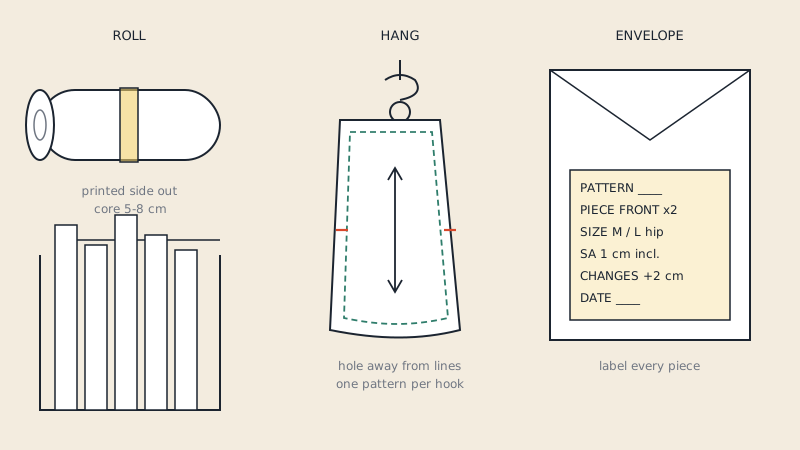
Store large printed pattern sheets rolled or hanging, and store cut-out or traced pieces flat in a labelled envelope or folder, one pattern per envelope. Label every piece with the pattern name, size and any changes you made, and keep the original PDF in a named digital folder so you can always reprint. Folding is fine for light-use patterns, but fold lines make long pieces harder to lay flat and can hide a notch.
The right method depends on what you have printed: a whole uncut A0 sheet, a stack of taped A4 tiles, pieces cut to your size, or tracings. Each needs something slightly different.
Four things you might be storing
| What it is | Typical form | Best storage | Why |
|---|---|---|---|
| Uncut copy-shop sheet | A0 or 36" plot, one or several sheets | Rolled in a tube or hung | Keeps all sizes; no folds through pieces |
| Taped tiles | Large, stiff, uneven sheet | Rolled loosely or cut into pieces | Tape creases and peels when folded tightly |
| Cut pieces in your size | Separate paper pieces | Flat in an envelope or sleeve | Easy to find and lay out |
| Tracings and adjusted pieces | Tissue, pattern paper, card | Flat or hanging, clearly marked | These carry your fitting work |
Rolling: best for whole sheets
A roll protects the lines and avoids creases. It suits uncut plots and large taped tile sheets.
How to roll a pattern:
- Roll with the printed side out. When you unroll it later, the sheet curls toward the table instead of up at you, and it lies flat faster.
- Roll around a core: a postal tube, a cardboard tube from the roll paper, or a length of rigid pipe. Rolling without a core gives tight, crushed centres.
- Do not roll too tightly. A core diameter of around 5–8 cm (2–3") is commonly used and keeps paper from creasing.
- Hold the roll with a paper band or low-tack tape, not rubber bands, which age and stick.
- Write the pattern name on the outside of the roll or on a tag, so you do not have to open it to know what it is.
Store rolls upright in a bin or umbrella stand, or horizontally on brackets. A shelf of postal tubes with labels on the end caps is easy to browse.
Hanging: best for patterns you use often
Hanging keeps pieces flat and visible, and it is how many studios store their master patterns.
- Punch a hole near the top of each piece, away from lines and notches, and hang the set on a pattern hook or a large binder ring.
- Or use skirt hangers with clips for large sheets and taped tiles.
- Hang one pattern per hook, with a card on top listing the pieces.
For heavier pattern card, hanging is the standard approach. For printed bond paper it works well as long as the room is dry.
Envelopes, sleeves and boxes: best for cut pieces
Once you have cut your size, the pieces are smaller and easier to fold gently into a large envelope.
- Use C4 or larger envelopes, or 10 × 13" (25 × 33 cm) clasp envelopes. Clear plastic document sleeves let you see the contents.
- Fold along lines that do not cross notches, darts or the grain line where you can.
- Put the instruction pages, the fabric layout and a photo or sketch of the finished garment in the same envelope.
- File envelopes upright in a box, by garment type or by pattern number.
Binders with clear pockets work well for print-at-home patterns whose pieces are not much larger than a few A4 sheets.
Label every piece
The most common storage problem is not damage; it is a pile of unlabeled paper. Two years later you cannot tell which size it was, whether seam allowance was included, or whether the sleeve was lengthened.
Write on each piece:
- Pattern name or number and view
- Piece name and how many to cut (for example "Front, cut 2")
- Size, or sizes if you blended between sizes
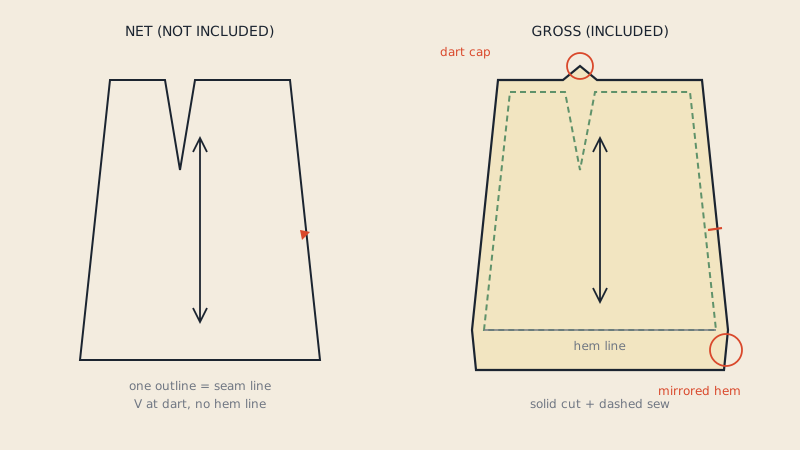
- Seam allowance: included and how wide, or "no SA". If you are not sure, check whether seam allowance is included before you file it.
- Changes: "+2 cm length", "FBA 2 cm", with the date
- Grain line, if it was faint on the print
A sticker or a stamp with these fields speeds this up. Put the same information on the envelope or roll.
Protect paper from damage
Printed bond paper is light and lasts well if kept away from the usual hazards:
- Damp: keep patterns out of basements and away from outside walls; damp paper stretches and can grow mould.
- Sun: direct sunlight fades lines and yellows paper over time.
- Heat: radiators and attics dry paper and make tape brittle.
- Pins and clips: they leave holes and rust marks; remove them before storing.
- Weight: heavy boxes on top of envelopes crush folded pieces into permanent creases.
If a pattern has been used a lot and the edges are tearing, it is often faster to reprint it than to repair it, as long as you kept the file.
Keep a digital archive
The PDF is the real master copy. Paper wears out; a well-named file does not.
A simple system:
- One folder per pattern, named with the designer, the pattern name and the year you bought it.
- Inside: the original download (all files, unchanged), the instructions, and a text note with your size, changes and fabric used.
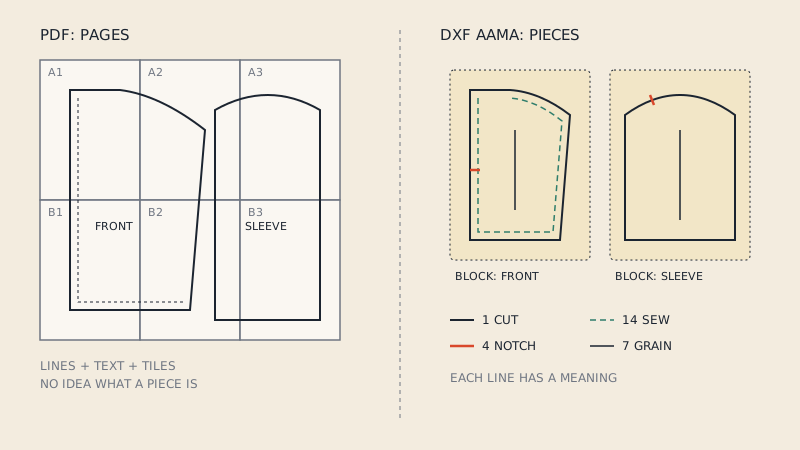
- If you made a copy-shop sheet, an A0 split or a DXF for pattern software, keep it in the same folder with a clear name.
- Back up the folder to a second place: an external drive or cloud storage.
- Keep the purchase email or receipt; some designers ask for it before resending files.
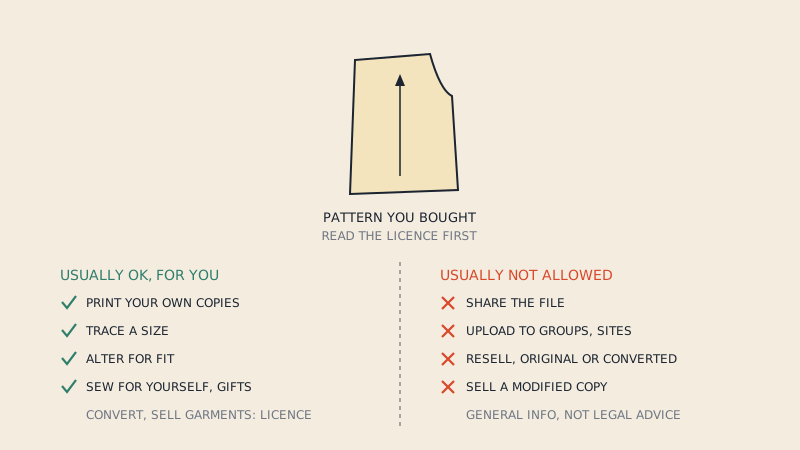
Keep the files for your own use. Most pattern licences forbid sharing them, even with friends; the main points are covered in our note on sewing pattern copyright, which is general information, not legal advice.
Storing traced and adjusted pieces
Your tracings carry the fitting work: the length changes, the blended sizes, the moved darts. Treat them as the most valuable version.
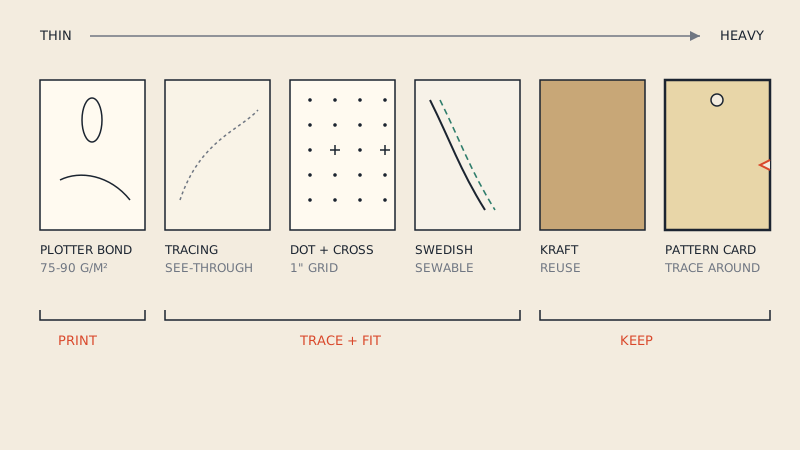
- Trace onto a durable paper if you will reuse the pattern often. Swedish tracing paper, heavier pattern paper or card last longer than tissue. Paper types are compared in plotter paper and pattern paper.
- Store the adjusted pieces separately from the original print, and mark them clearly as "adjusted".
- Note the adjustments in the digital folder too, so a reprint can be adjusted the same way.
A quick routine after each project
- Unpin and flatten the pieces.
- Check every piece is there against the instruction list.
- Update the labels with any changes made during sewing.
- Store flat or rolled, and update the note in the digital folder.
FAQ
What is the best way to store printed PDF sewing patterns?
Roll uncut large sheets printed side out around a tube, and store cut pieces flat in a labelled envelope or hanging from a hook. Keep the PDF in a named folder so you can reprint at any time.
Should I fold or roll pattern pieces?
Roll large sheets and long pieces to avoid fold lines through the pattern. Small cut pieces can be folded gently into an envelope, ideally along lines that do not cross notches or darts.
What should I write on stored pattern pieces?
Write the pattern name, piece name and cut quantity, size, whether seam allowance is included and how wide, and any changes you made with the date.
How do I stop taped PDF tiles from tearing in storage?
Roll them loosely around a tube instead of folding, and keep them away from heat, which dries the tape. If they are worn, cut out your size and store the pieces flat, or reprint from the file.